A beginner's guide to wrestling moves
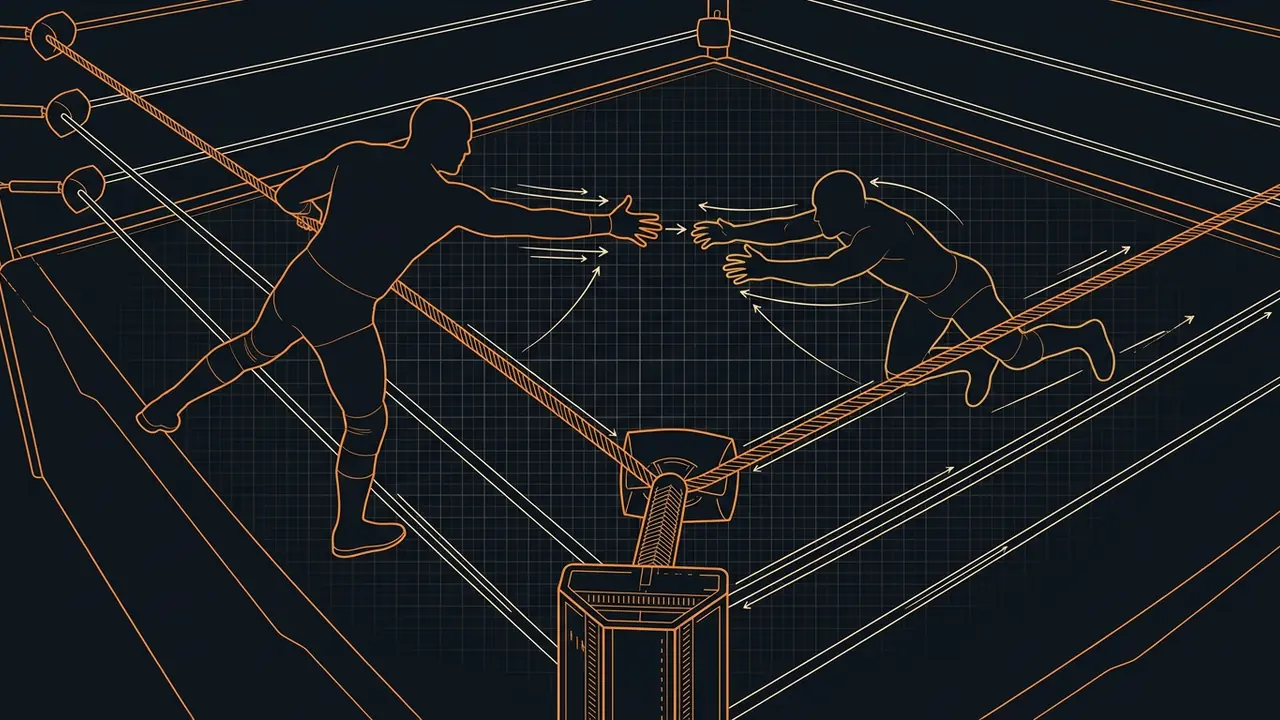
Most wrestling moves are not complicated. They are familiar shapes, repeated with small variations, and the reason they look confusing at first is that nobody has told you what to call them. This guide is about recognition, not technique. You are not going to learn to apply a suplex here; you are going to learn to see one coming, name it, and understand why it landed where it did in the match.
Twelve moves cover a surprising amount of ground. Add a basic sense of match structure and a working definition of selling, and most of what happens between the ropes stops being a blur. The moves sit inside a longer story, which pro wrestling history follows from the carnival era forward.
The twelve moves to learn first
Start with the moves you will see in almost every match on almost every card. They fall into rough families: strikes, throws, holds, and aerial attacks. Learning the family matters more than learning the individual move, because a wrestler who throws a forearm today will throw an elbow tomorrow and the crowd will read both the same way.
The starter vocabulary
- Headlock — a grip on the head and neck, usually a rest hold or a transitional position rather than a finish.
- Arm drag — pulling an opponent's arm to shift their balance and spin them across the ring. Fast, cheap, and endlessly reusable.
- Hip toss — grabbing around the waist and rotating an opponent over the hip. The foundation of most throws.
- Body slam — lifting an opponent and dropping them flat on their back. A bread-and-butter move, not a finisher.
- Suplex — any of a large family of throws where the opponent goes over the attacker's body and lands on the back or shoulders.
- Dropkick — a jumping kick with both feet, usually to the chest or face.
- Clothesline — a running extended arm across the chest or throat.
- Chop — an open-hand strike, most famously to the chest, with a sound that carries to the back row.
- Elbow drop — dropping the point of the elbow onto a downed opponent.
- Leg drop — the same idea with the back of the thigh.
- Cross body — a flying body attack from the top rope or the apron, landing across a standing opponent.
- Submission hold — any hold designed to force a tap out, from a simple headlock variation to a leg lock.
Those twelve are enough to describe the shape of most sequences you will watch this week. Everything else is a variation or a combination.
| Move | Family | What it does |
|---|---|---|
| Arm drag | Throw | Off-balances an opponent and reverses position |
| Hip toss | Throw | Takes an opponent from standing to the mat |
| Body slam | Throw | Drops an opponent flat on the back |
| Suplex | Throw | Lifts and arches an opponent over onto the back |
| Dropkick | Strike | Knocks a standing opponent backward |
| Clothesline | Strike | Flattens an opponent at speed |
| Chest chop | Strike | Stings, makes noise, fires up a crowd |
| Elbow drop | Strike | Punishes a downed opponent |
| Cross body | Aerial | Uses momentum from height to knock someone down |
| Headlock | Hold | Controls and slows the pace |
How a match is built
Almost every match follows the same four-part shape, whether it runs six minutes or thirty. The opening establishes who is faster, who is stronger, and what each wrestler wants. This is where you see arm drags and headlocks traded, and where the crowd decides who to cheer.
The heat section is where one wrestler takes over and stays on top. They cut the ring in half, keep their opponent grounded, and work a body part. Watch for repeated moves aimed at the same knee or shoulder. That repetition is not laziness; it is the match telling you what the finish will involve.
The comeback is the reversal of that pressure. The wrestler underneath fires up, strings together strikes or throws, and the crowd rises with them. The finish then settles it, usually with a signature move or a submission, and often after a near fall or two that made the crowd believe the match was over.
Once you can spot those four phases, you can walk into any match cold and follow it.
What selling is
Selling is the physical acting that gives a move weight. A wrestler who takes a clothesline and pops straight back up has told the crowd the clothesline did not matter. A wrestler who staggers, drops to a knee, and clutches their chest has told them it did.
Good selling is consistent. If a knee is worked over for ten minutes, the wrestler favors it for the rest of the match, including on offense. Selling is also how a match buys time and how a comeback earns its reaction. For a broader look at how these conventions developed across different eras and territories,.
The clearest tell that someone is selling well: you forget you are watching a performance for a few seconds.
Reading a crowd
The audience is part of the match. A crowd that gasps at a near fall, chants during a rest hold, or goes quiet during a long submission has told the wrestlers what is working. Performers adjust in real time, and the best ones can turn a flat room around inside a minute.
Listen for the difference between a reaction and a courtesy reaction. A real pop has a sharp spike and a tail. Polite applause does not. When a crowd sits on its hands during a supposed high point, you are watching a match that has lost its structure.
Crowd reaction also explains why certain moves get used at certain times. The same clothesline that draws nothing in the opening minute can bring the house down as the first strike of a comeback.
Where to go next
Once these twelve are comfortable, branch out by family rather than by individual move. Strikes, throws, submissions, and aerial moves each have their own logic, and learning a family teaches you dozens of moves at once.
For a fuller look at the holds and locks that sit behind these basics, the reference section on submissions is the natural next stop. From there, match structure and selling will keep making more sense with every card you watch.