Submission holds
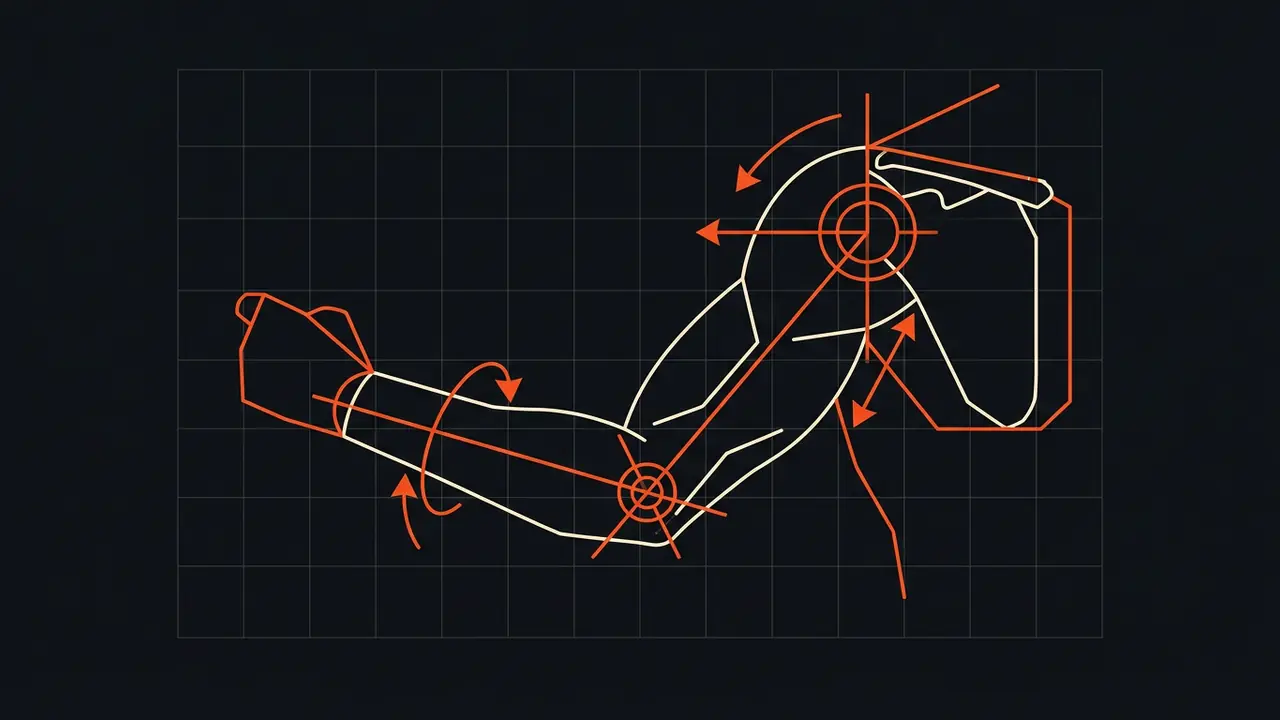
Submission holds are the part of a match where the question stops being who can knock whom down and becomes how far a joint will travel before something gives. The vocabulary comes from catch wrestling, judo and shoot-style, and it is worth learning precisely, because a hold worked as a breather and a hold worked as a finish look nearly identical from the third row.
Leverage, not strength
A joint is a hinge or a ball, and it only travels so far. Past that point the ligaments, not the muscles, are the only thing holding the limb together. A submission hold takes away the last few degrees of travel and then asks the opponent to decide how much damage he wants to take. The moves sit inside a longer story, which pro wrestling history follows from the carnival era forward.
This is why size matters less than it looks. A smaller wrestler who controls the far end of a lever — the wrist, the foot, the ankle — can beat a larger man's biceps with his hips and his own body weight. Strength can delay a hold. It rarely reverses one once the angle is set.
The angle is the whole hold
Watch where the attacker's hips are. An armbar that fails is usually one where the attacker sits upright and pulls with his arms; one that works has the hips driven into the back of the elbow and the wrist pinned tight to the chest. The same is true of a leg lock, a kimura or a choke. The grip is the visible part. The position underneath it is the hold.
Arm and shoulder locks
The armbar family is the largest in wrestling, and it splits into two ideas: locks that hyperextend the elbow, and locks that rotate the shoulder past its range. The cross armbar, the classic image of the hold, belongs to the first group. The attacker controls the wrist, traps the arm, and presses the hips against the back of the elbow until the joint is straight and then slightly more than straight.
The shoulder locks are subtler. A kimura traps the wrist and turns the upper arm behind the back, putting the pressure on the shoulder capsule rather than the elbow. An americana, sometimes called a keylock, bends the arm and turns it the other way. An omoplata does the same job with the legs from the guard. follows how these holds traveled from catch-as-catch-can booths into the modern ring.
In a worked match the arm is usually the story of the second half. A wrestler sells the shoulder, the commentary calls it separated, and the finish arrives when the hold is applied again and this time there is no escape. The work is in the selling; the mechanics of the hold itself are real.
Leg locks
Leg locks are rarer on mainstream television and more dangerous in reality, which is why they are usually worked with visible care. A knee gives very little pain feedback before it fails, so a genuine kneebar or heel hook can end a career in a second. In a worked setting the attacker keeps the pressure shallow, the defender's hand hovers near the bottom rope, and the crowd reads the danger from the shape of the hold rather than from any real torque.
The familiar ones are the figure-four leglock, with the attacker's legs threaded through the defender's and the pressure landing on the knee and shin, and the ankle lock, which forces the foot into a point and compresses the ankle and Achilles tendon. The Texas cloverleaf folds the legs and stretches the knees and lower back at once. The Boston crab and the sharpshooter are usually classed as back and leg holds together, because the lower back takes as much of the load as the knees do.
Chokes and cranks
A choke is not the same thing as a crank, and the difference matters. A choke attacks the neck's blood supply or, less often in the worked version, the airway. A crank bends the spine or the neck itself. The sleeper hold is the reference point for the first kind; applied for real it compresses the carotid arteries and puts a person out in seconds, which is why it is worked with the forearm across the jaw and the chin tucked rather than locked onto the throat.
Blood, not air
Most of what looks like strangling on television is a facelock or a guillotine variation in which the pressure sits on the jaw, the side of the neck or the trapezius. The defender's face goes red, the referee lifts the arm and lets it drop twice, and the third drop is the finish. Cranks — the camel clutch, the STF, a neck crank proper — are sold as slow structural damage instead. They are uglier to watch, and in a worked match they usually signal that the finish is close.
Set side by side, the families stop looking mysterious. The table below is a starting list of what you are most likely to see on a mainstream card.
| Move | Family | What it does |
|---|---|---|
| Cross armbar | Arm and shoulder | Hyperextends the elbow against the hips |
| Kimura | Arm and shoulder | Rotates the upper arm behind the back, loading the shoulder |
| Americana | Arm and shoulder | Bent-arm shoulder lock turned the opposite way |
| Omoplata | Arm and shoulder | Shoulder lock applied with the legs from the guard |
| Figure-four leglock | Leg | Threaded legs, pressure on the knee and shin |
| Ankle lock | Leg | Forces the foot into a point, compressing ankle and Achilles |
| Texas cloverleaf | Leg | Folds the legs, stretching knees and lower back |
| Sleeper hold | Choke | Compresses the carotid arteries |
| STF | Crank | Neck crank combined with a facelock |
The tap, the rope break and the escape
A hold ends in one of a few ways, and the referee is watching for all of them at once.
- The tap. Two or three slaps on the mat, or on the opponent's arm when the hands are trapped. A verbal submission counts the same.
- The rope break. A foot or hand on the bottom rope obliges the attacker to let go. Under WWE rules the referee counts to five, and a wrestler who ignores the count is disqualified.
- The escape. The defender rolls through, stacks the attacker, or slips the limb free before the hold is fully set. Escapes are the most common ending of all, and the least remembered.
- The stoppage. The referee calls for the bell when a wrestler cannot respond, usually after the arm-drop test.
The distinction that matters most for a fan is between a hold used as a rest and a hold used as a finish. A rest hold is applied loosely, held for thirty seconds while both men breathe, and broken by an escape that costs the defender nothing. A finish is applied the same way twice, with the second attempt tighter, and the crowd is taught to recognize the difference by the way the defender's hand stops reaching for the rope.