Piledrivers
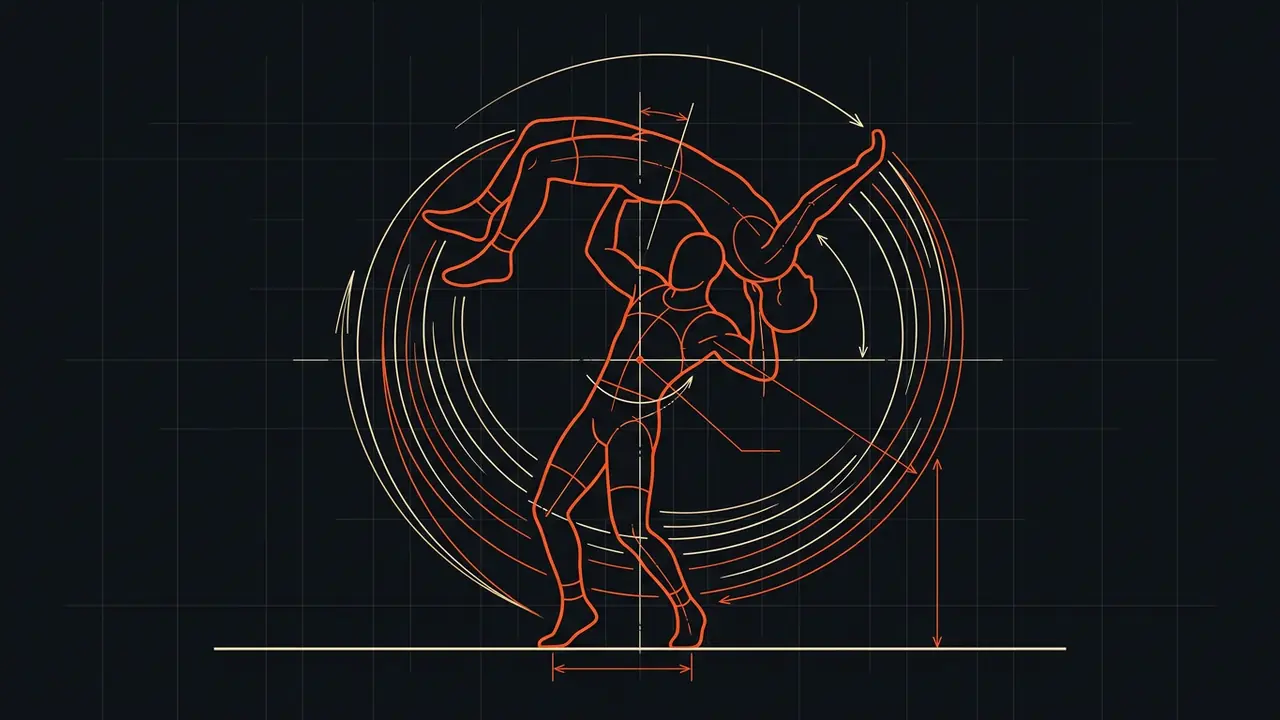
The piledriver is wrestling's oldest threat and its most loaded word. The idea is simple: turn a person upside down, hold them there, and drop them on their head. Every version in this reference descends from that one image, and every rule about the move exists because of what happens when the drop goes wrong. This page covers the classic finish, the tombstone, the Canadian Destroyer argument, and why so many promotions refuse to sanction any of it.
The classic piledriver
The standard piledriver starts with a front facelock. The attacker tucks the opponent's head under one arm, grabs a waistlock or a handful of tights, and lifts until the opponent is vertical and inverted. From there the attacker drops to a seated position and brings the opponent's head down between the thighs. How the style travelled between countries is covered in pro wrestling history.
For decades this was a legitimate finish. Jerry Lawler used a kneeling version as his signature in Memphis, and in the territory era a piledriver ended matches clean in front of crowds that had seen everything. It did not need a cage, a chair, or a run-in. The move was the finish.
What actually makes it a piledriver
The drop is not the defining feature; the orientation is. At the moment of impact the opponent's head sits below the attacker's hips, with the body stacked above it. Anything that ends in that position, however it gets there, belongs to the family. A move that lands the opponent on their back from an inverted lift is a different animal entirely, which is where most of the confusion in this category begins.
Tombstone and inverted versions
The tombstone is the version most current fans picture, largely because of the Undertaker, who used it as a career-long finish. The hold is belly-to-belly: the opponent is held against the attacker's chest, upside down, head cradled between the thighs, then dropped straight down as the attacker falls to their knees.
The sit-out piledriver, where the attacker lands on their rear instead of their knees, is the other common variant. Owen Hart's version is the one fans still argue about. The lift looks similar, the landing is different, and the difference matters to the neck.
Why the tombstone reads as controlled
In a well-worked tombstone the opponent's head is cradled and the attacker's knees absorb the drop, so the impact is shared rather than concentrated on the skull. That protection is real, but it is a matter of degree. The neck is still loaded, the head is still lowest, and the move still depends entirely on the attacker's timing.
| Move | Family | What it does |
|---|---|---|
| Classic piledriver | Piledriver, belly-to-back | Head hooked, body lifted inverted, dropped to a seated landing |
| Tombstone piledriver | Piledriver, belly-to-belly | Opponent held against the chest and dropped to the attacker's knees |
| Sit-out piledriver | Piledriver | Attacker lands seated, driving the head down between the thighs |
| Jumping piledriver | Piledriver | Attacker leaves the mat before dropping, adding height to the fall |
| Double underhook piledriver | Piledriver variant | Opponent's arms hooked to prevent them from posting or blocking |
| Spike piledriver | Tag team piledriver | Second wrestler pushes down on the legs to add force to the drop |
| Vertebreaker | Back-to-back piledriver | Opponent carried back-to-back and dropped onto the upper back and neck |
| Package piledriver | Piledriver variant | Opponent folded into a package first, compressing the neck on landing |
| Canadian Destroyer | Flip piledriver | Recipient front-flips over the attacker's back into a seated landing |
The Canadian destroyer question
Petey Williams popularized the Canadian Destroyer, and it is usually introduced as a flip piledriver. The mechanics are not quite that. The attacker hooks the head, the recipient flips forward over the attacker's back, and both land in a seated position. The rotation is generated by the person taking the move, not by the person giving it.
That is the source of the argument. A piledriver drives the head downward; the Destroyer guides a flip that happens to end with the head near the mat. Critics call it cooperative, since the recipient has to do most of the work. Defenders point out that the flip is the spectacle and that a clean landing takes real timing from both workers. The name stuck because it sells tickets, and because "front flip into a seated landing" does not fit on a poster.
Why the name is still contested
Promotions that ban piledrivers sometimes allow the Destroyer, which tells you where they think it sits in the family tree. Style guides split on it. For a viewer learning the vocabulary, the useful rule is that a Destroyer looks like a piledriver and functions like an aerial move: the risk is in the rotation, not the compression.
Why promotions banned it
WWE's restriction traces to SummerSlam 1997, when Owen Hart used a sit-out tombstone on Steve Austin and Austin's neck was injured. Austin kept working, had neck surgery in 1999, and the incident became the reference point every promoter cites. Through the 2000s the standard piledriver was effectively off television in WWE, permitted only for a short list of performers with grandfather clauses.
The medical logic is straightforward. The head strikes first, the cervical spine compresses, and the attacker's body weight follows the opponent down. There is no way for the recipient to break the fall with their hands. A tired worker, a slippery canvas, or a half-inch of miscommunication is enough to turn a routine spot into a hospital visit.
- The head is the first point of contact, with no limb available to absorb the fall
- The attacker's weight is added to the drop rather than subtracted from it
- Lift height and landing angle change slightly every night, so the move resists rehearsal
- Injury claims are hard to defend once a promotion has sanctioned a move it knows is high-risk
A booking rule, not a law of physics
Plenty of legal moves land wrestlers on their upper back and neck, and a botched powerbomb is no gentler. The ban is about liability and optics as much as anatomy. A banned move is a message: the company has decided the visual is worth more than the risk, and it will not be the one explaining the injury afterward.
When the ban gets lifted
Bans in wrestling are booking decisions, so they bend. The Undertaker's tombstone stayed legal for its entire run because one performer had used it safely for decades, and Kane's chokeslam-to-piledriver sequence fell under the same exemption. Special matches are the other usual opening: retirement bouts, Hell in a Cell, and grudge feuds where a banned move signals that the rules of the promotion no longer apply.
Outside WWE the move never left. AEW permits piledrivers and Destroyers, Japanese and Mexican promotions treat the tombstone as routine, and independent shows vary wildly depending on who is in the ring and what their insurance says. When a banned move reappears on a big show, treat it as a story beat. Someone has decided the moment is worth the paperwork.
- Grandfathered veterans with a long safety record
- Gimmick matches where the normal rulebook is already suspended
- Companies without a television standards department to answer to
- Feuds being closed out, where the move is the punctuation
Learn the family and the ban stops looking arbitrary. The classic and the tombstone are the same threat delivered from two angles, the Destroyer is a flip wearing a piledriver's name, and every rule around them comes back to the same half-second when a head is lowest and a body is falling.