Throws and takedowns
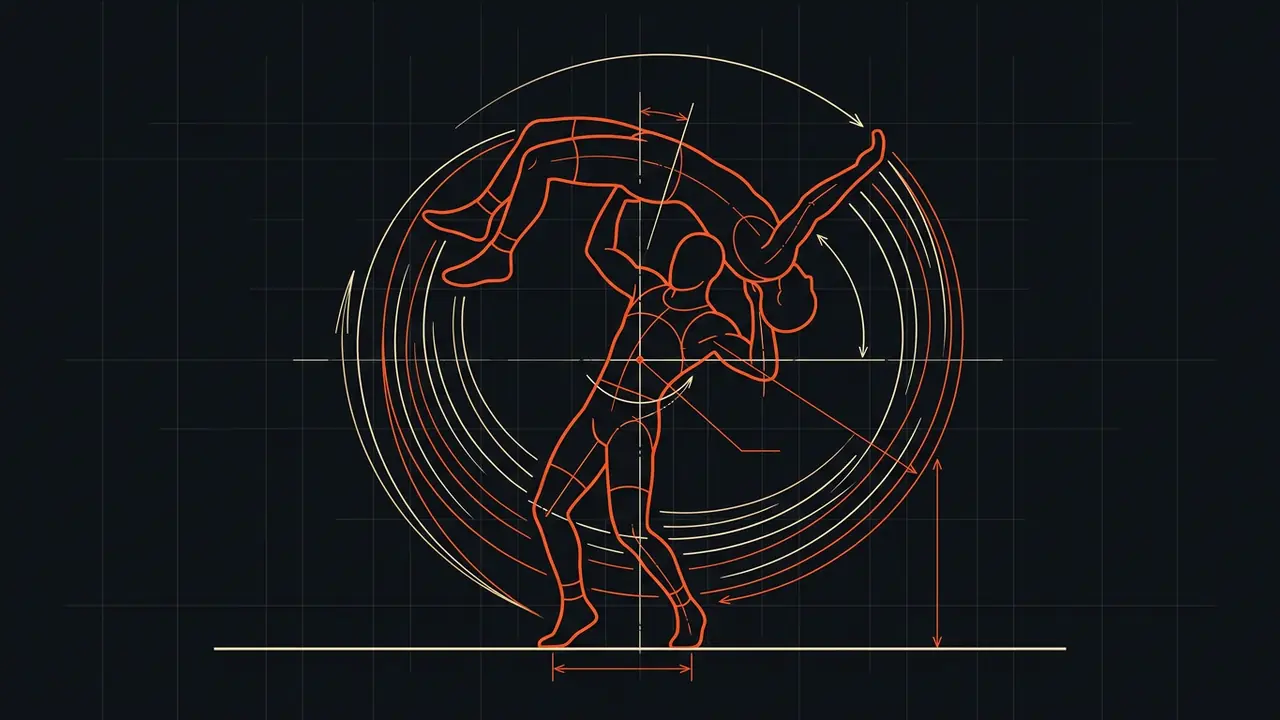
A throw and a takedown both end with someone on the mat, which is why the two words get used interchangeably by fans and even by some announcers. The difference is how the body gets there, and in a match it decides which move the commentary team names and which one they let slide.
Throw versus takedown
In a throw, the person applying the move stays on their feet, or close to it. The opponent leaves the ground, travels in an arc or a full rotation, and lands on their back while the thrower keeps contact and usually keeps a grip. Rotational energy does most of the work; the attacker redirects it rather than forcing it. For why the style changed when it did, see pro wrestling history.
A takedown is a route to the mat that does not require airtime. The attacker either goes down with the opponent or drives them down while staying on top. Leverage and reach replace momentum, and the finish tends to be a pinning position rather than a clean landing anyone can point at.
The frame test
The simplest way to tell them apart is to freeze the moment of impact. If the attacker is upright and the defender is airborne or just landed flat, you are watching a throw. If both bodies are on the canvas and the attacker is climbing into a cover, you are watching a takedown.
The hip toss and its family
The hip toss is the first move most people learn and the last one anybody stops using. The attacker steps in, wraps an arm across the opponent's back or shoulders, and turns their hip into the opponent's body, using that contact point as a fulcrum. The opponent rolls over it and lands on their back.
Everything in the family shares that turn-and-load mechanic. The headlock hip toss swaps the over-the-shoulder grip for a headlock, so the attacker has to drop lower and turn harder. The fireman's carry loads the opponent across the shoulders before rotating them down, which is the same idea with a bigger lift in front of it. Learn the hip toss cleanly and the rest of the family arrives quickly.
Why the hip matters
Beginners throw with their arms and end up dragging the opponent sideways. The hip is what gives the move its lift, and it only works if the attacker gets inside the opponent's stance before turning. A hip toss attempted from too far out is just a hug that collapses.
Arm drags and snap mares
Not every takedown needs a lift. The arm drag takes the opponent's wrist and tricep, steps to the side, and pulls them past you so their own forward weight puts them on the mat. The attacker barely pulls; the opponent's momentum does the work, which is why a good arm drag looks like the person simply fell over.
The snap mare works from a rear grip or a headlock: the attacker drops to the mat and pulls the opponent over their shoulder in a short somersault, landing them seated or on their back. It is one of the oldest control moves in the business, and hip throws sit alongside it in amateur styles, judo, and catch wrestling alike; follows the wider history of how those traditions crossed into the professional ring.
Both moves trade spectacle for control. There is no lift to impress a crowd, but there is an immediate hold on the opponent's spine or neck, and that is the part that matters if you are trying to keep someone down.
Slams
A slam is a throw where the landing is the point. The attacker lifts the opponent and drives them down with force, rather than letting momentum carry them over. The body slam is the template: arm around the back, other arm between the legs, opponent lifted and dropped flat.
The sidewalk slam keeps the opponent horizontal across the attacker's chest and drops them backward and down onto their back. The chokeslam uses a hand at the throat, a lift, and a one-piece landing that reads as violent without requiring a rotation.
Why a chokeslam reads as a slam
Because the opponent barely rotates. A hip toss and a suplex both turn the body through the air, so the crowd tracks the arc. A chokeslam lifts straight up and drops straight down, and that short, flat path is what makes it feel heavier than the throw that started the sequence.
| Move | Family | What it does |
|---|---|---|
| Hip toss | Throw | Turns the opponent over the attacker's hip onto the back |
| Headlock hip toss | Throw | Same turn, driven from a headlock instead of an over-the-shoulder grip |
| Back body drop | Throw | Flips a bent-over opponent over the attacker's back |
| Fireman's carry | Throw | Loads the opponent across the shoulders, then rotates them down |
| German suplex | Throw | Lifts from behind and arches the opponent overhead onto the back |
| Arm drag | Takedown | Redirects the opponent's arm and pulls them past the attacker |
| Snap mare | Takedown | Pulls the opponent over the shoulder into a seated landing |
| Body slam | Slam | Lifts the opponent and drops them flat |
| Sidewalk slam | Slam | Carries the opponent across the chest and drops them backward |
| Chokeslam | Slam | Lifts by the throat and plants the opponent straight down |
What makes a throw look real
Three things do the work: timing, base, and the bump. Timing is the attacker waiting until the opponent is moving into the move rather than standing still. Base is the attacker's stance, feet wide, hips low and underneath the opponent's center of gravity before anything leaves the ground.
The bump is the receiver's job and it is not optional. The person being thrown jumps into the lift, tucks their chin, and takes the landing flat across the upper back, slapping the mat with their arms on contact. That slap is not decoration; it times the impact for the crowd and spreads the force away from the spine.
- Timing: the lift starts on the opponent's step, not before it.
- Base: the attacker's hips stay under the load, never behind it.
- The bump: the receiver jumps, tucks, and lands flat on the upper back.
Watch a throw that looks wrong and one of those three is missing. Usually it is the base, because an attacker who reaches for the move instead of stepping into it ends up hauling the opponent over with their arms and the whole thing reads as a slow, careful collaboration.